
Zengo Wallet is a self-custodial crypto wallet that uses multi-party computation instead of a traditional seed phrase. Its recovery model, reported security record, and optional Pro features distinguish it from many conventional software wallets. This independent review examines how Zengo works, its security advantages and tradeoffs, its fees and features, and how it compares with other wallet options.
Disclaimer: This review contains referral links, and we may receive a commission if you sign up through them. This does not affect our analysis or conclusions.
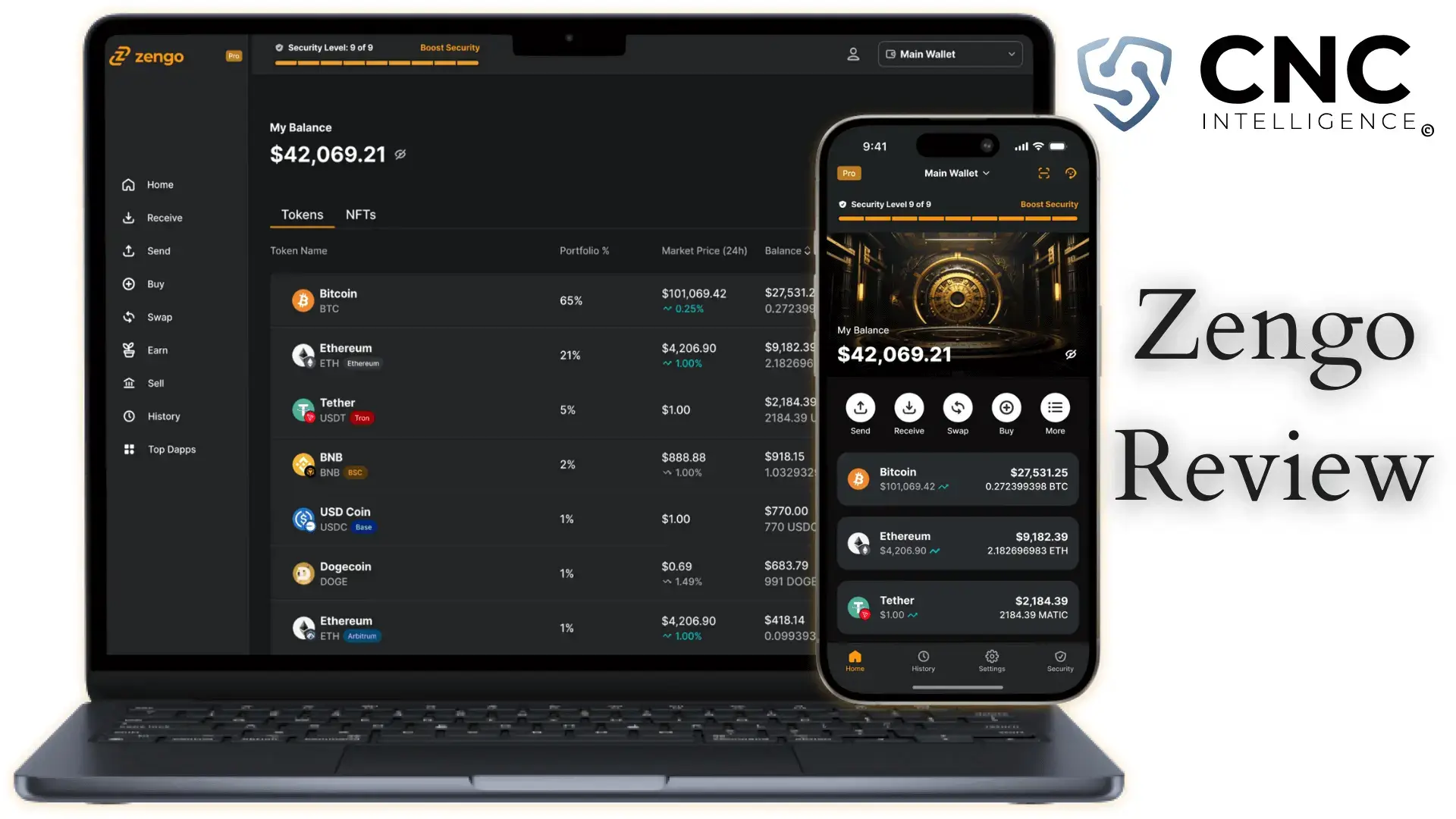
In a Hurry? Here’s Everything You Need to Know at a Glance
Is Zengo Wallet Safe? A Closer Look at Its Security
Zengo Wallet is a self-custodial wallet that does not require users to manage a traditional seed phrase. How does that work? Is Zengo safe to use? Can you trust it?
“Not your keys, not your coins” is one of crypto’s best-known rules. Zengo follows the principle of self-custody, but it takes a different approach. Instead of giving users a traditional seed phrase to manage, it uses multi-party computation, or MPC, to divide transaction-signing capability between two secret shares.
Zengo combines MPC-based threshold signing with device authentication and account-recovery tools. 3D FaceLock is optional for standard account recovery, although it may be required if previously enabled and is used for certain Pro security features.
Zengo says that no Zengo wallet has been hacked or stolen since its launch in 2018 and that it serves more than two million users. That is an impressive reported track record, but it does not mean the wallet is immune to future attacks, phishing, compromised devices, or user error.
User-review sites also provide useful context, although they should not be treated as independent proof of security. Feedback is generally favorable, with recurring praise for usability and customer support. Critical reviews tend to focus on fees, transaction limits, verification requirements, and the availability of particular features.
In this review, we look at Zengo’s security model, recovery process, fees, features, and limitations. We also compare it with several popular wallets and exchanges so you can decide whether it fits the way you use cryptocurrency.
What Is Zengo Wallet?
Zengo is a self-custodial software wallet designed to make cryptocurrency storage easier for people who do not want to manage a seed phrase. If you are comfortable using a mobile app, you should find its basic functions relatively straightforward.
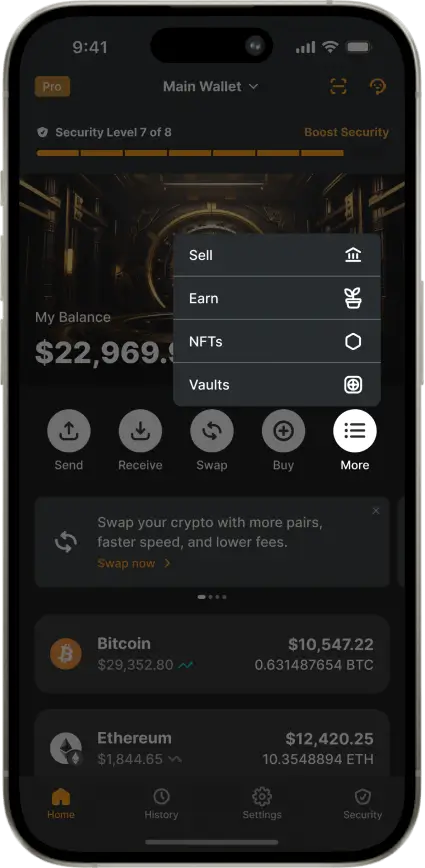
By using Zengo Wallet, you can:
- Access a simple, beginner-friendly interface
- Use supported ENS names, which may reduce address-entry errors
- Create a Recovery Kit for restoring account access
- Avoid the need to store and protect a traditional seed phrase
- Buy, sell, and swap supported assets through integrated third-party providers
Many traditional self-custody wallets, including most hardware wallets, use a 12- or 24-word recovery phrase. If users lose every copy of that phrase and have no alternative recovery method, they may permanently lose access to the associated assets.
Seed phrases can be phished, photographed, misplaced, destroyed, or accidentally thrown away. Yes, even a dog chewing up a paper backup can become a serious financial problem. Zengo removes that particular point of failure, but it replaces it with a different recovery model. Users must protect their email account, cloud storage, device, and Recovery File.
Self-custody removes reliance on a centralized exchange or custodian, but it does not remove personal responsibility. It changes what the user must protect.
How MPC Technology Works
How can Zengo be self-custodial if it does not provide a traditional seed phrase? The answer is MPC.
Zengo creates two independently generated secret shares. One share is stored on the user’s mobile device, while the other is maintained on Zengo’s servers. The shares work together to authorize transactions without revealing their underlying secrets to each other, and neither share can authorize a transaction alone.
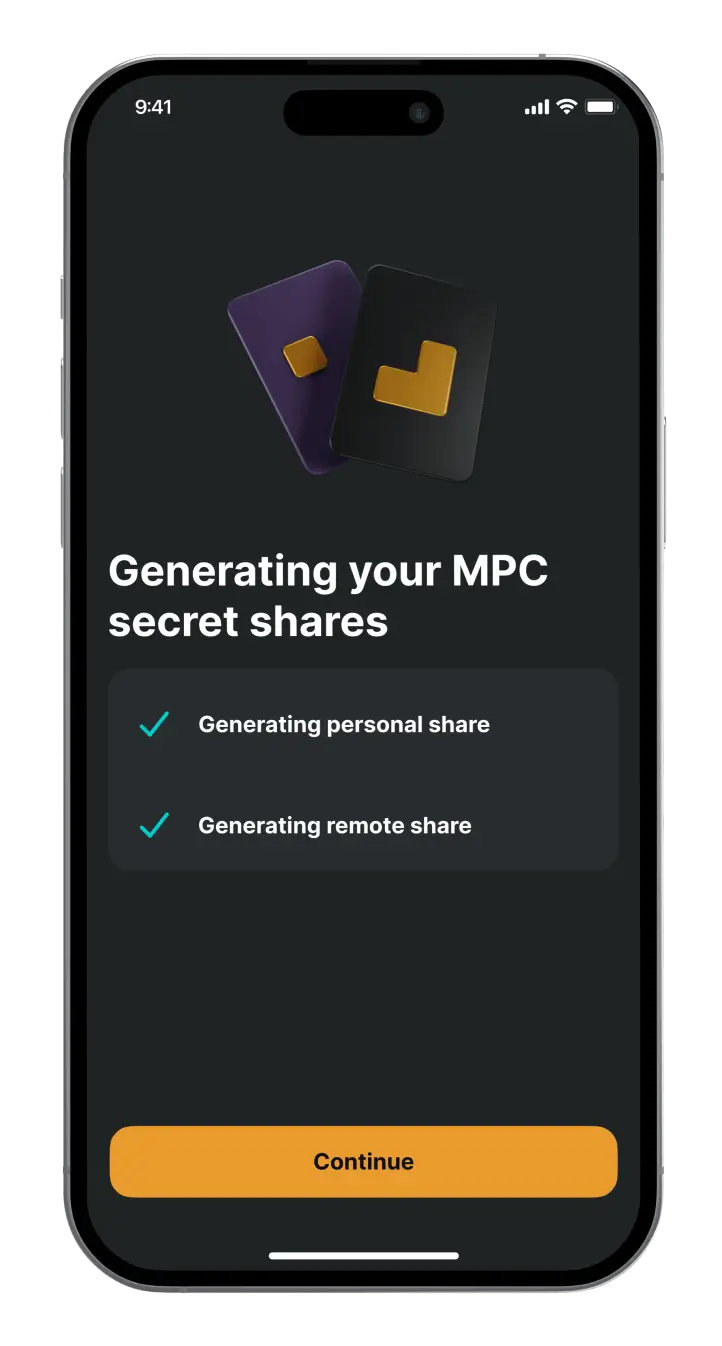
A simple way to picture the system is a safe with two independent locks. One lock is controlled through the user’s device, and the other is controlled through Zengo’s server infrastructure. Both must participate in the signing process, but neither side needs to hand its secret to the other.
MPC technology is not new. Financial institutions and digital-asset companies have used forms of MPC and threshold cryptography for years. Zengo’s contribution is applying this type of technology to a consumer wallet with a recovery process designed for ordinary users.
The tradeoff is important: Zengo removes the traditional seed phrase, but everyday transaction signing normally depends on both the device share and Zengo’s server share.
Zengo Wallet’s Value Proposition
One barrier to broader cryptocurrency adoption is the difficulty of managing self-custody securely. Wallet addresses are confusing, seed phrases are unforgiving, and a simple mistake can have permanent consequences.
Zengo attempts to make self-custody more approachable by:
- Removing the burden of traditional seed phrase management
- Providing account backup and recovery options
- Offering a relatively simple interface
- Adding optional protections for higher-value accounts and Web3 activity
Zengo’s principal advantage is that it combines self-custody with a recovery process that does not depend on a traditional seed phrase. Its principal tradeoff is that users must protect several recovery components and normally rely on Zengo’s server infrastructure when signing transactions.

Zengo Wallet App Review
Zengo is primarily a mobile wallet, with support for iOS and Android, but it also offers desktop access. Desktop transactions still require approval through the user’s mobile device, and the personal MPC share remains on the phone.
The interface is clean and generally easy to understand. The app brings together tools for sending, receiving, buying, selling, swapping, staking, accessing Web3 applications, and managing supported NFTs. Some functions are handled by third-party providers and may not be available in every country or for every asset.
What Is an ENS Address?
ENS, short for Ethereum Name Service, is a permissionless naming system built on Ethereum. It allows human-readable names such as vitalik.eth to resolve to wallet addresses and other records.
Zengo users can configure a supported wallet address as the destination for an ENS name. This allows someone to send funds using a name such as joe.eth rather than entering a long hexadecimal address.
ENS names can be easier to read and remember than conventional wallet addresses. They may reduce manual entry errors, but users should still verify the displayed destination before approving a transaction.
Account Recovery
A distinguishing feature of Zengo is its ability to restore account access without requiring a traditional seed phrase.
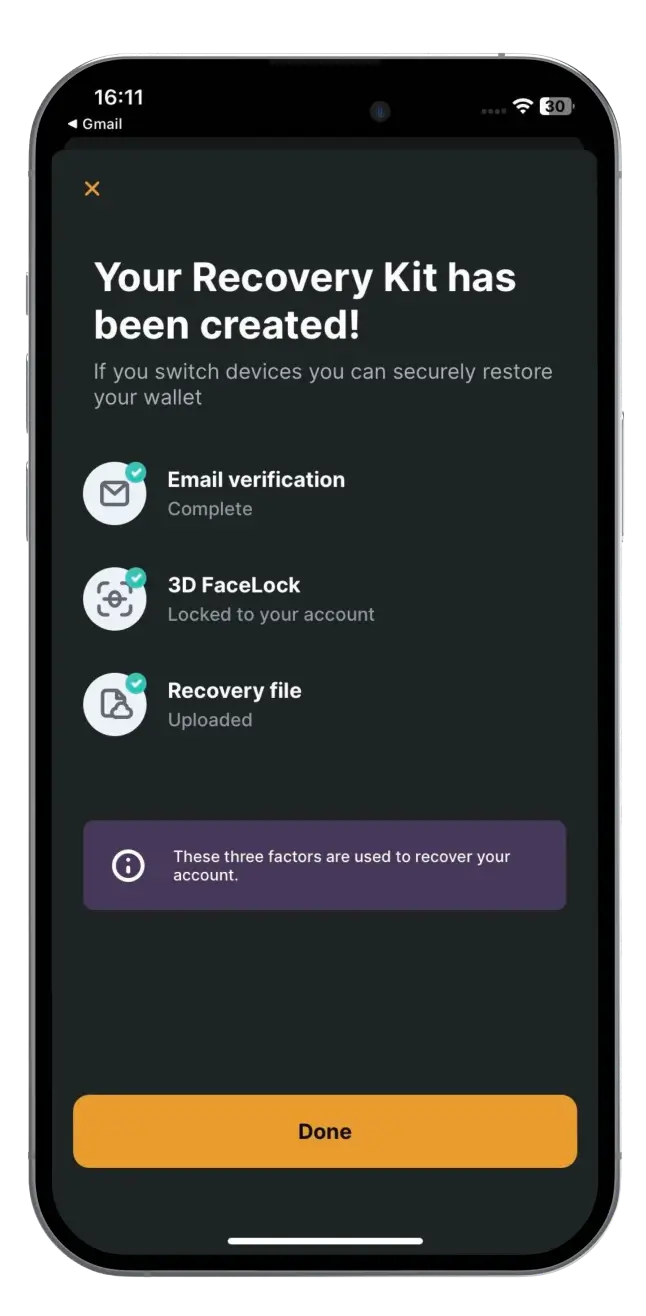
To recover an account, users generally need access to their registered email address and Recovery File. Users who previously enabled 3D FaceLock may also need to complete facial verification. Zengo requires 3D FaceLock for certain Pro security features.
This recovery model reduces the risk of users being permanently locked out because of a lost seed phrase, although they must still protect their email account, cloud storage, device, and Recovery File.
Other features of Zengo Essentials, the free version, include:
- Buying and selling cryptocurrency. These services are available through integrated third-party providers and are subject to regional availability, fees, transaction limits, and identity verification.
- In-app swaps. Users can swap supported assets through third-party providers. Available pairs, routes, rates, limits, and fees can vary.
- Multiple payment methods. Depending on the user’s region and provider, available methods may include payment cards, bank transfers, PayPal, Apple Pay, and Google Pay.
- Network and asset support. Zengo supports more than 1,000 assets across numerous networks, although users should always confirm that the exact asset and network are supported before sending funds.
- Layer 2 support. Zengo supports assets on networks including Base, Optimism, Arbitrum One, and Polygon.
- Staking. Eligible users can stake supported assets such as ETH and Tezos, subject to minimums, network conditions, lockup rules, and staking risks.
- Web3 connectivity. Users can connect to supported dApps and NFT marketplaces through WalletConnect and related integrations.
- NFT support. Zengo can store and display supported NFTs, although support varies by network and file type.
- Desktop access. Users can view and manage their wallet through Zengo Desktop, with mobile approval required for sensitive actions.
- Customer support. Zengo advertises 24/7 support through the application.
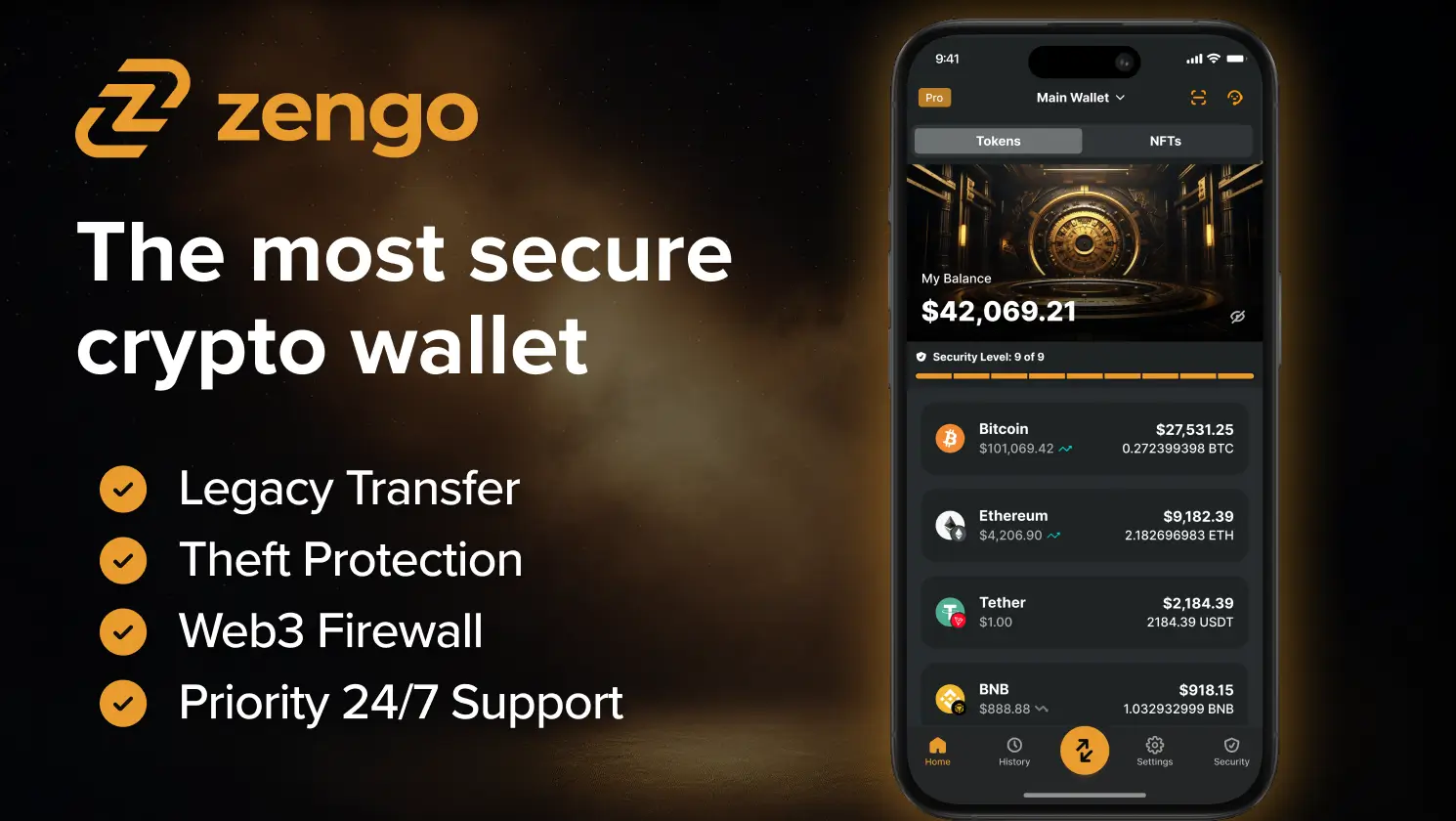
Advanced users can pay for Zengo Pro. Current Pro features may include:
- Multiple segregated wallets. Users can separate assets by purpose, such as long-term storage, Web3 activity, or higher-risk transactions.
- Zengo Vaults. Vault features may include delayed withdrawals and additional controls intended to protect higher-value assets.
- Theft Guard. Users can require 3D FaceLock verification for withdrawals or approvals above a selected threshold.
- Transaction privacy features. Zengo can generate new public addresses for supported Bitcoin and Dogecoin transactions, reducing simple address reuse.
- Legacy Transfer. Users can designate a recipient and configure a plan for transferring assets after a defined period of inactivity. This feature should be coordinated with the user’s broader estate plan rather than treated as a substitute for legal advice.
- Advanced Web3 protection. Zengo provides transaction simulations, risk assessments, and alerts intended to help users identify suspicious Web3 interactions.
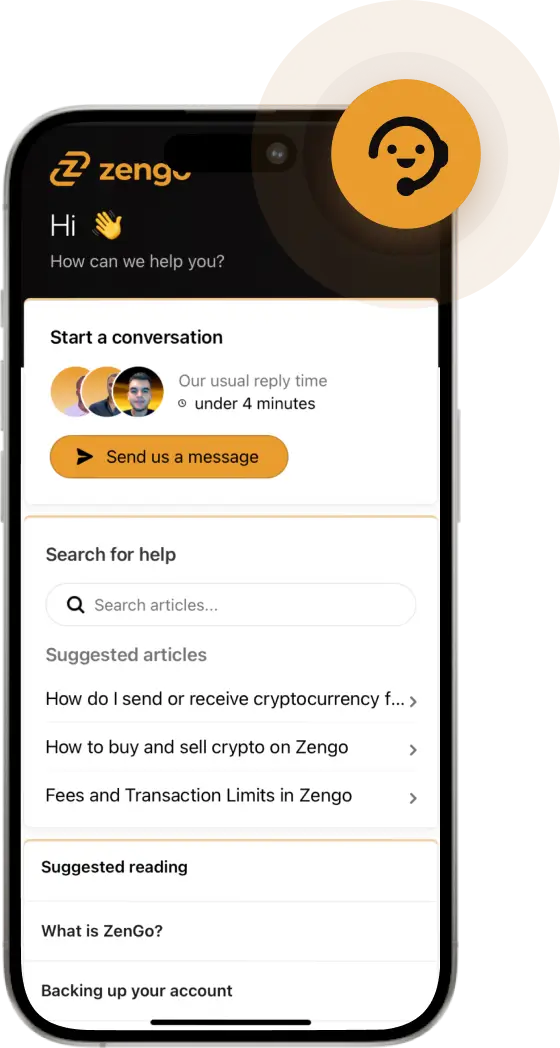
- Discounted purchase fees and priority support. Zengo advertises reduced purchase fees and priority 24/7 support for Pro users.
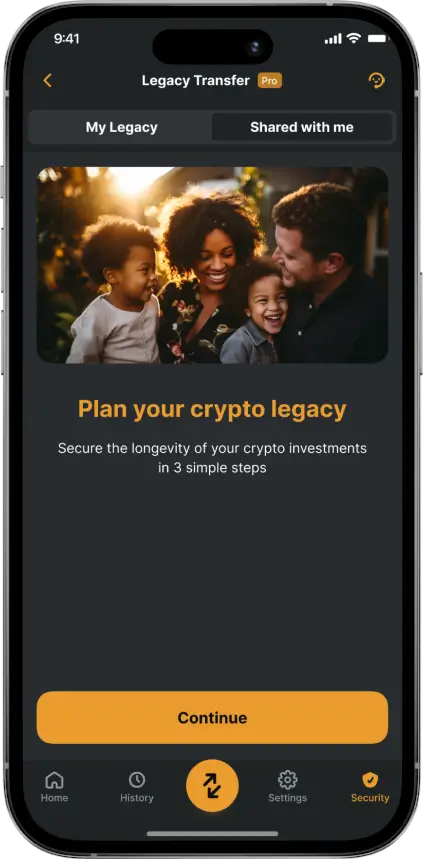
Pro benefits and pricing can change. Users should review the current feature list and subscription price inside the app before subscribing.
Is Zengo Legit and Safe? Security Features Explained
Zengo’s security model addresses one of the most common self-custody failure points: the loss or theft of a recovery phrase. Its MPC architecture divides transaction-signing capability between a device share and a server share, so neither share can authorize a transaction independently.
Zengo says that no Zengo wallet has been hacked or stolen since the wallet launched in 2018. This is a strong reported record, but no wallet should be described as unhackable. Security also depends on how users protect their devices, email accounts, recovery information, and transaction approvals.
Zengo’s model creates a different set of responsibilities from a conventional seed phrase wallet. Compared with a hardware wallet, Zengo may reduce recovery-phrase management risks and simplify restoration. A hardware wallet, however, may provide stronger offline isolation because its signing keys are kept on a dedicated device that is not continuously connected to the internet.
The preferable model depends on the user. Someone who is likely to misplace a seed phrase may benefit greatly from Zengo’s recovery system. Someone who is comfortable managing backups and wants maximum offline isolation may prefer a hardware wallet.
Security Issues Associated with Account Recovery
Account recovery creates a security tradeoff. It reduces the risk of permanent lockout, but the recovery factors must themselves be protected.
Standard Zengo recovery generally requires access to the registered email address and Recovery File. If 3D FaceLock was previously enabled, facial verification may also be required. Zengo also uses 3D FaceLock for certain Pro security features.
Users should protect their email and cloud-storage accounts with unique passwords and multi-factor authentication. Zengo allows users to add a secondary email and maintain additional copies of the Recovery File in supported cloud services.
Zengo describes 3D FaceLock as designed to resist photographs, videos, masks, and deepfake-based spoofing. An independent review should still avoid describing any biometric system as completely immune to attack.
What Happens if Zengo Goes Out of Business?
Because one MPC share is normally maintained on Zengo’s servers, users reasonably ask what would happen if the company ceased operating.
Zengo says it has established an independently operated recovery system involving software escrow, trustees, and a public GitHub repository. According to Zengo, this system is intended to help users recover their wallets without the company if Zengo goes out of business.
This is an important contingency mechanism, but it remains a contingency plan described by Zengo. Users with substantial holdings should understand how it works and consider whether they are comfortable relying on it.
The 2025 Bybit theft demonstrated that wallet security can fail at several layers, including compromised developer systems, manipulated transaction interfaces, and signing workflows.
Zengo’s lack of a traditional seed phrase removes one common phishing target, but users can still be exposed to malicious dApps, deceptive transaction requests, compromised devices, and social-engineering attacks. Its Web3 protections are intended to warn users about certain suspicious interactions, but they cannot eliminate every risk.
Zengo states that it has undergone multiple independent security reviews by firms including Kudelski, AppSec, Scorpiones, and CertiK. The publicly linked CertiK report referenced here was completed in 2023. You can read the CertiK findings here (PDF).
Zengo Crypto Wallet Reviews
User feedback is generally positive, with recurring praise for ease of use and customer support. Critical reviews also mention fees, transaction limits, verification requirements, and feature availability.
As of July 2026:
- Trustpilot showed an overall rating of approximately 4.2 out of 5 based on more than 1,100 reviews.
- Apple’s App Store showed a rating of 4.7 out of 5 based on approximately 4,400 ratings.
- Capterra showed a rating of 4.8 out of 5 based on 167 reviews.
Ratings can change, and review sites have their own verification and moderation systems. They provide useful information about user experience, but they do not independently prove that a wallet is secure.
Zengo Fees and Minimum Deposit
Zengo Essentials is free to download and use. Zengo itself does not charge for receiving or storing cryptocurrency.
Sending cryptocurrency generally requires a blockchain network fee. This fee is paid to the network rather than to Zengo, and the amount depends on the blockchain and current network conditions.
Buying, selling, and swapping are handled through integrated third-party services and may involve:
- Processing fees
- Spreads
- Gateway or payment-method fees
- Currency-conversion charges
- Blockchain network fees
The final cost varies according to the provider, asset, payment method, region, transaction size, and market conditions. Zengo displays a transaction quote before approval. Users should review the complete fee breakdown and compare the final amount with other available services.
There is generally no minimum balance required simply to receive and store supported cryptocurrency. Buying, selling, swapping, and staking may have provider-specific minimums and maximums. Zengo’s current purchase page lists a $50 minimum purchase, although the applicable minimum can vary by provider, region, and payment method.
Zengo Pro is a paid subscription. As of July 2026, it was generally advertised at approximately $19.99 per month or $199.99 per year, although platform pricing, regional pricing, and taxes may vary. Confirm the current price inside the app before subscribing.
Zengo vs. Other Wallets: Coinbase, Binance, Trust Wallet, and MetaMask
Zengo’s strongest differentiator is its MPC-based recovery model. Other wallets and exchanges may offer advantages involving offline storage, asset support, browser integration, trading costs, or ecosystem compatibility. There is no single wallet that is best for every user.
Zengo vs. Trust Wallet
A standard Trust Wallet is self-custodial and typically uses a recovery phrase that the user must protect. Trust Wallet offers broad asset and dApp support, but the recovery phrase remains a critical point of responsibility.
Zengo removes the traditional recovery phrase and provides an account-recovery process. This may be preferable for users worried about losing a seed phrase. Trust Wallet may appeal to users who want a more conventional wallet structure and broader Web3 compatibility.
Zengo vs. Coinbase
A standard Coinbase.com account is custodial, meaning Coinbase manages the private keys associated with assets held on the platform. This makes password and account recovery possible, but it also means users rely on Coinbase as custodian.
Coinbase also offers a separate self-custody wallet product, now associated with the Base app. That product should not be confused with a custodial Coinbase.com account.
Coinbase.com may be more convenient for frequent trading, fiat deposits, and withdrawals. Zengo may be more suitable for users who want self-custody without managing a traditional seed phrase.
Zengo vs. Binance
Binance is primarily a custodial trading platform. It offers broad market access and may provide lower trading costs, but users rely on Binance to safeguard assets held on the platform.
Zengo is designed primarily for self-custody. It may be preferable for long-term storage or users who want direct control, while Binance may be more practical for active trading.
Zengo vs. MetaMask
MetaMask is a self-custodial wallet with extensive browser and dApp integration. Traditional MetaMask accounts use a Secret Recovery Phrase, although newer sign-in and recovery options may be available for some account types and platforms.
MetaMask may suit experienced Web3 users who want deep dApp integration and conventional wallet control. Zengo may be easier for users who are particularly concerned about losing a recovery phrase and want a structured recovery process.
| Feature | Zengo | Trust Wallet | Coinbase.com | MetaMask |
| Custody model | Self-custodial MPC wallet | Self-custodial wallet | Custodial exchange account | Self-custodial wallet |
| Traditional seed phrase | No | Typically yes | No user-controlled seed phrase | Typically yes; newer account options may vary |
| Primary recovery method | Email and Recovery File; 3D FaceLock when applicable | Recovery phrase | Coinbase account-recovery process | Secret Recovery Phrase or supported connected sign-in method |
| Buying and swapping | Available through integrated providers | Available through integrated providers | Core platform function | Available through integrated providers and swap routes |
| ID required to create the basic wallet or account | Generally no government ID for basic wallet creation | Generally no government ID for basic wallet creation | Yes, identity verification is generally required | Generally no government ID for basic wallet creation |
Third-party providers used to buy or sell cryptocurrency may require KYC even when the underlying self-custodial wallet does not.
Pros & Cons of Using Zengo
Everything considered, is Zengo the right wallet for you? Here is a balanced summary.
Pros
- No traditional seed phrase to lose, expose, or misplace
- MPC-based transaction signing with no single share able to authorize transactions alone
- A structured account-recovery process
- A strong security record reported by Zengo since 2018
- A simple interface that is accessible to less technical users
- Support for more than 1,000 assets across numerous networks
- Desktop access with mobile approval for sensitive actions
- Optional Pro protections, including Theft Guard, multiple wallets, Legacy Transfer, and advanced Web3 alerts
Cons
- Users must protect their email account, cloud storage, device, and Recovery File
- Normal transaction signing depends on interaction with Zengo’s server share
- As a software wallet, it does not provide the same offline isolation as a dedicated hardware wallet
- Buying, selling, and swapping through third-party providers may involve higher fees than a dedicated exchange
- Some of the most advanced security and estate-planning features require a paid Pro subscription
- Zengo is not anonymous, and third-party fiat providers generally require identity verification
FAQ
What do people ask about Zengo Wallet?
Final Verdict: Should You Use Zengo?
If you like the idea of self-custody but dread managing a seed phrase, Zengo deserves serious consideration. Its MPC architecture and Recovery Kit address several common causes of wallet loss, and its interface is approachable enough for beginners.
It is not perfect. Users still need to protect their email, device, cloud account, and Recovery File. Normal signing also relies on Zengo’s server infrastructure, and the wallet does not provide the same offline isolation as a dedicated hardware wallet.
Zengo is particularly well suited to users who prioritize recoverability, simplicity, and protection from seed phrase loss. Frequent traders may find lower costs on a dedicated exchange, while highly security-conscious users who are comfortable managing backups may prefer a hardware wallet.
Overall, Zengo is a strong and thoughtfully designed self-custodial wallet with a genuinely different approach to account security. Its reported record since 2018 is impressive, but users should still evaluate the tradeoffs and follow basic security practices. Explore Zengo Wallet.
Learn about other Multi-Party Computation (MPC) wallets.
Your name, comment, and timestamp will be public when you comment. We also store this data, which may be used for research or content creation, per our Privacy Policy. By commenting, you consent to these terms.